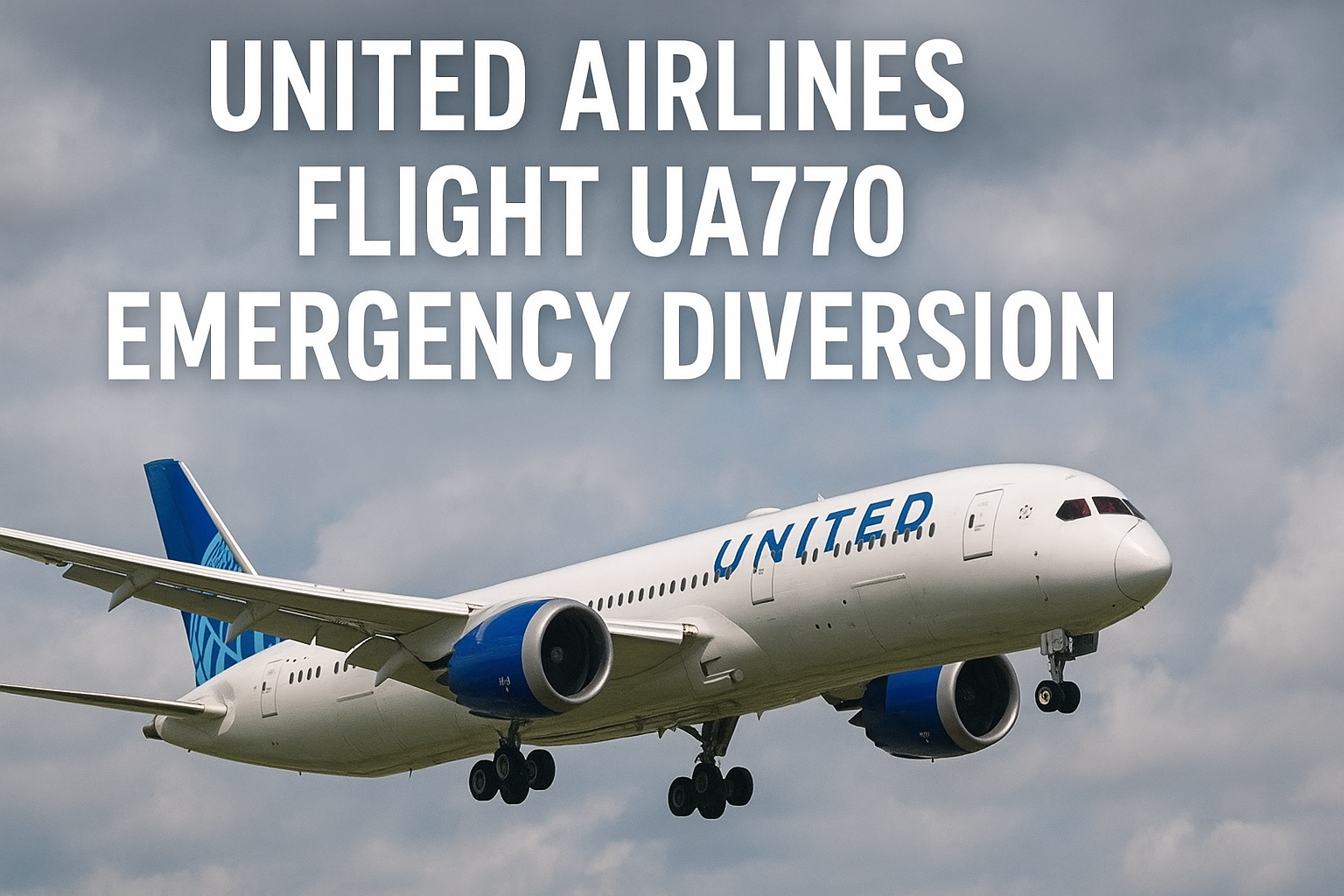
United Airlines Flight UA770 Emergency Diversion: What Really Happened
“United Airlines Flight UA770 Emergency Diversion” On May 27, 2025, United Airlines flight UA770 declared an in-flight emergency and diverted to London Heathrow Airport (LHR). This article explains what caused the United Airlines flight UA770 emergency diversion, how the crew responded, how passengers were taken care of, and the broader lessons for aviation safety.
The Flight and the Emergency
United Airlines flight UA770 was operating from Barcelona El-Prat Airport (BCN) to Chicago O’Hare International Airport (ORD).
The aircraft used on this route was a Boeing 787-9 Dreamliner, a long-haul aircraft well-suited for transatlantic flights.
Approximately 90 minutes into the flight, while cruising at about 37,000 feet, the crew detected a suspected cabin pressurization anomaly.
As soon as the alert appeared, the pilots declared an emergency by activating Squawk 7700, the universal transponder code indicating a general in-flight emergency.
Air traffic control immediately prioritized the aircraft, preparing for a safe diversion.
Why the Diversion to London Heathrow?
The crew decided to divert to London Heathrow (LHR) because it is one of the best-equipped airports in Europe for handling large aircraft emergencies.
Heathrow has:
- Long, modern runways
- Strong emergency response capability
- Excellent maintenance and technical support facilities
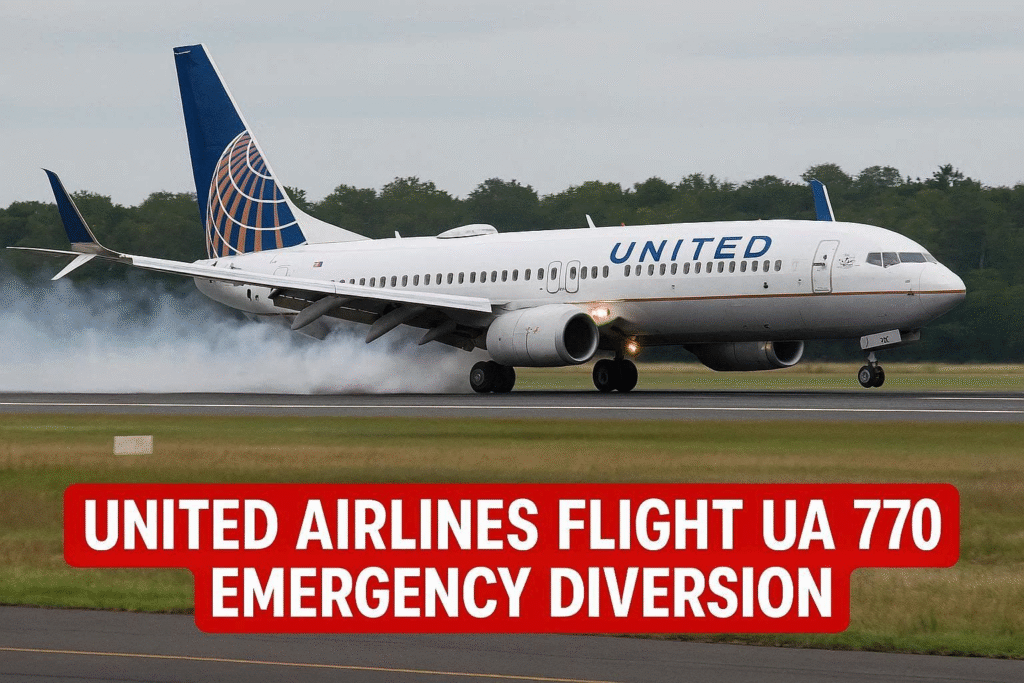
The aircraft landed safely on Runway 27R and then taxied to Gate B44 for technical inspection.
What Went Wrong: The Pressurization Anomaly
The issue appeared to involve a warning or possible malfunction in the cabin pressurization system.
Passengers reported that oxygen masks did not deploy, indicating that the cabin did not experience a full depressurization.
The Boeing 787-9 has redundant pressurization systems, but even a single alert must be taken seriously.
The cockpit crew used ACARS data communication to coordinate with United Airlines’ maintenance control team. After assessing the situation, they made a precautionary decision to divert rather than continue over the Atlantic with a potential pressurization risk.
Crew Response & Decision Making
After detecting the anomaly, the flight crew followed their emergency checklists and standard operating procedures.
The steps included:
- Declaring Squawk 7700 to receive priority handling
- Beginning a controlled descent to a safer altitude
- Preparing the aircraft for diversion
- Communicating with passengers calmly and professionally
Emergency services were on standby at Heathrow, although no injuries were reported.
Passenger Experience During the Diversion
Passengers said the descent felt controlled and steady, not abrupt.
Although there was some tension in the cabin, many praised the crew for maintaining calm, giving clear updates, and explaining the situation.
Once on the ground, United Airlines provided:
- Rebooking assistance
- Meal vouchers
- Hotel accommodations for stranded passengers
- Help with missed or tight connections
The aircraft later underwent a thorough technical inspection at Heathrow.
Technical and Safety Considerations
The incident highlights how seriously airlines treat pressurization warnings, even if they are only suspected anomalies.
Key safety takeaways include:
- Redundant aircraft systems are designed to prevent a single fault from becoming dangerous.
- Crew training is extensive and covers emergencies such as pressurization issues and diversions.
- Decision-making during emergencies involves pilots, maintenance control, operations, and dispatch, all assessing risk and safety.
- By regulation, captains are empowered to divert whenever safety may be at risk.
Broader Safety Lessons from the UA770 Diversion
This diversion shows that precautionary action can prevent a more serious event.
Important lessons include:
- Early detection and prompt response prevent escalation.
- Clear communication helps keep passengers calm.
- Proper post-event care builds trust.
- Incidents like this provide valuable data to improve training, diagnostics, and procedures.
What Passengers Can Learn
Passengers can take away important lessons from situations like this:
- Stay calm: crews are trained for emergencies.
- Listen carefully to instructions.
- Keep essentials (passport, medicine, charger) in your carry-on.
- Know your rights: Airlines often provide rebooking, meals, or accommodation.
- Document your experience if you need to claim compensation or follow up later.
Why This Diversion Is a Positive Example of Aviation Safety
While the United Airlines flight UA770’s emergency diversion may sound alarming, it actually demonstrates how aviation safety systems work:
- The crew acted immediately when detecting a warning.
- Squawk 7700 ensured priority handling.
- The landing was safe and controlled.
- Passengers received full support afterward.
- The aircraft underwent a complete inspection before returning to service.
The event shows that the system, the crew, the airline, and safety regulators responded exactly as designed.
Challenges & Open Questions
Despite the successful outcome, some questions remain:
- What was the precise technical cause of the pressurization alert?
- How often do similar warnings occur on modern aircraft?
- Could the airline improve emotional support for passengers?
- Should compensation rules for emergency diversions be standardized?
- Will United Airlines or aviation authorities release a detailed report?
Quick Info Table: United Airlines Flight UA770 Emergency Diversion
| Category | Details |
|---|---|
| Flight Name | United Airlines Flight UA770 |
| Airline | United Airlines |
| Flight Type | Scheduled passenger flight |
| Incident Type | Emergency diversion |
| Reason for Diversion | Safety-related issue (general category; specific cause may vary depending on the event) |
| Action Taken | Flight rerouted to the nearest suitable airport for medical or technical safety checks |
| Passenger Safety | Passengers typically remain safe and are assisted by airline staff upon landing |
| Crew Response | Followed all emergency protocols and coordinated with ground control |
| Aircraft Status | Inspected after landing to ensure safe continuation or replacement |
| Impact on Schedule | Delay or rebooking depending on aircraft condition |
| Support to Passengers | Meals, rebooking, communication assistance, or accommodation if needed |
| Main Objective of Diversion | Protect passenger and crew safety at all times |
Conclusion
The United Airlines flight UA770 emergency diversion on May 27, 2025, was a well-managed aviation incident.
A suspected cabin pressurization anomaly triggered an emergency declaration, and the pilots diverted to London Heathrow, where they landed safely. No passengers were injured, and United provided strong post-landing support.
Rather than being a failure, this incident reinforces the effectiveness of modern aviation safety: redundant systems, highly trained crews, quick decision-making, and professional communication all played important roles.
FAQ – United Airlines Flight UA770 Emergency Diversion
1. What is United Airlines Flight UA770?
United Airlines Flight UA770 is a long-haul passenger flight that operates between Barcelona (BCN) and Chicago O’Hare (ORD), usually using a Boeing 787-9 Dreamliner.
2. Why did United Airlines Flight UA770 divert?
The flight diverted due to a suspected cabin pressurization anomaly. Even a small warning in the pressurization system requires immediate attention and may lead to a precautionary diversion.
3. What does “Squawk 7700” mean?
“Squawk 7700” is an emergency transponder code used by pilots to alert air traffic control that the aircraft is experiencing a general emergency and needs priority handling.
4. Why was London Heathrow chosen for the diversion?
London Heathrow (LHR) is one of the best-equipped airports for handling emergencies. It offers:
- long runways,
- strong emergency response teams,
- advanced technical and maintenance support for large aircraft.
5. Were the passengers in danger?
There were no injuries and no rapid loss of pressure. The crew diverted the flight as a precaution, which is standard safety practice.
6. Did the oxygen masks deploy?
No. Oxygen masks deploy only when the cabin altitude rises to a dangerous level. In this case, the alert did not indicate a full depressurization.
7. How did the crew respond during the incident?
The flight crew:
- followed emergency checklists,
- declared an emergency,
- coordinated with maintenance and dispatch,
- made a controlled descent,
- updated passengers calmly and clearly.
8. What did passengers experience during the diversion?
Passengers described the descent as smooth and controlled.
The cabin crew gave clear instructions and reassurance, helping everyone stay calm.
9. What support did United Airlines provide after landing?
United helped passengers by offering:
- rebooking on new flights,
- meal vouchers,
- hotel accommodations if needed,
- assistance with missed connections.
10. Was the aircraft inspected after landing?
Yes. The aircraft underwent a full technical inspection to identify any issues and ensure the plane was safe before being returned to service.
11. Are emergency diversions common?
They are not frequent but also not unusual. Airlines prioritize safety above all else, so even small alerts can lead to an immediate diversion.
12. Do passengers get compensation after a diversion?
Compensation depends on:
- airline policy,
- regional aviation rules,
- the cause of the diversion.
Safety-related diversions are usually not eligible for financial compensation, but airlines often provide meals, hotels, and rebooking.
13. What should passengers do during an in-flight emergency?
Passengers should:
- stay calm,
- listen to instructions,
- keep seatbelts fastened,
- follow cabin crew guidance at all times.
14. Will a final investigation report be released?
Airlines may release summaries or general findings.
Full technical reports depend on internal policies and aviation authorities.
15. What is the main takeaway from the UA770 emergency diversion?
The incident shows how aviation safety works: early detection, fast decision-making, trained crews, and strong emergency procedures keep passengers safe.














Post Comment