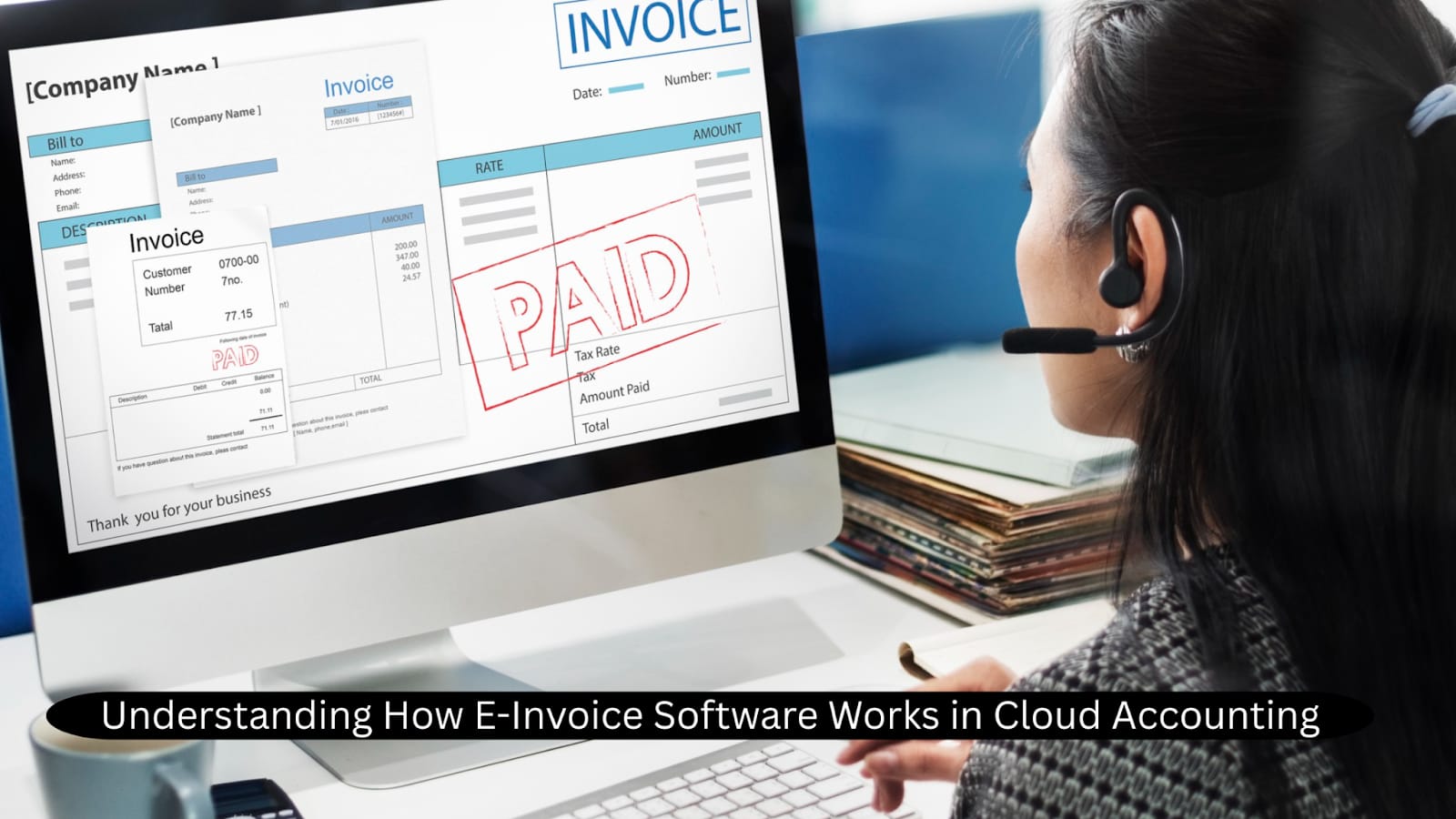
Understanding How E-Invoice Software Works in Cloud Accounting
The worst leak in your cash flow may be the way you bill them.
The world e-invoicing market is expected to reach more than $24 billion by 2025. This spurt marks a significant shift in the flow of money in the B2B economy.
E-invoicing refers to the computerized transfer of invoice information in coded digital formats such as XML or UBL. Cloud accounting refers to online software for managing finances in real time.
These two technologies are combined to form the magic. E-invoice software is an application that can be used with cloud accounting to automate billing processes, tax compliance, and improve operational efficiency.
So, this article will take you into the mechanics behind this integration, which will be the fundamentals of automated finance for the future itself. But first, the basics.
What is E-Invoice Software?
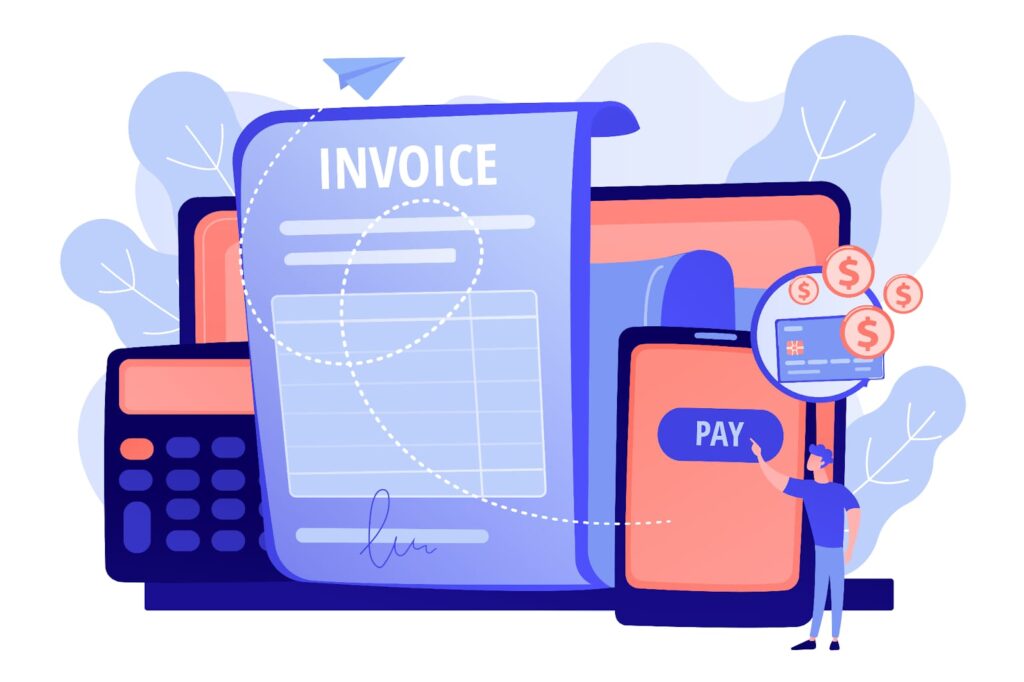
E-invoice software is fundamentally a digital engine that creates, transmits, accepts, and stores invoices in an organized data format. E-invoice software allows two accounting systems to communicate with each other, unlike a PDF attached to an email.
Key Features include:
Auto-generation of purchase orders or contracts, digital signatures to verify sender and data integrity, and real-time verification against tax regulations before sending.
The Benefits Overview
The impact is measurable. Studies indicate that businesses achieve a decrease in Days Sales Outstanding (DSO) rate of up to 15% and reduced manual errors.
In places with stringent tax digitization policies, the choice of the tool is significant. Companies operating in specific Asian markets should ensure that the e invoice software they use meets the local tax authorities’ standards to avoid penalties.
Role of Cloud Accounting in Modern Business
Cloud accounting is the brain of contemporary financial management. Software has moved the general ledger from the dusty desktop computer to the safe cloud, accessible in real time through web and mobile applications.
Why It Pairs with E-Invoicing
Cloud accounting products are powerful, however they tend to be silos. The absence of integration means that data must be keyed in or imported. E-invoicing bridges this gap.
- Eliminates Data Silos: Invoices received or issued are automatically reflected in the general ledger.
- Native Integrations: The majority of large cloud providers have launched plug-and-play connectivity services with e-invoicing networks.
- Adoption Stats: According to recent surveys, more than 70% of Small and Medium Businesses (SMBs) have migrated to cloud-based financial tools to gain a better view of their cash flow.
How E-Invoice Software Integrates with Cloud Accounting Platforms
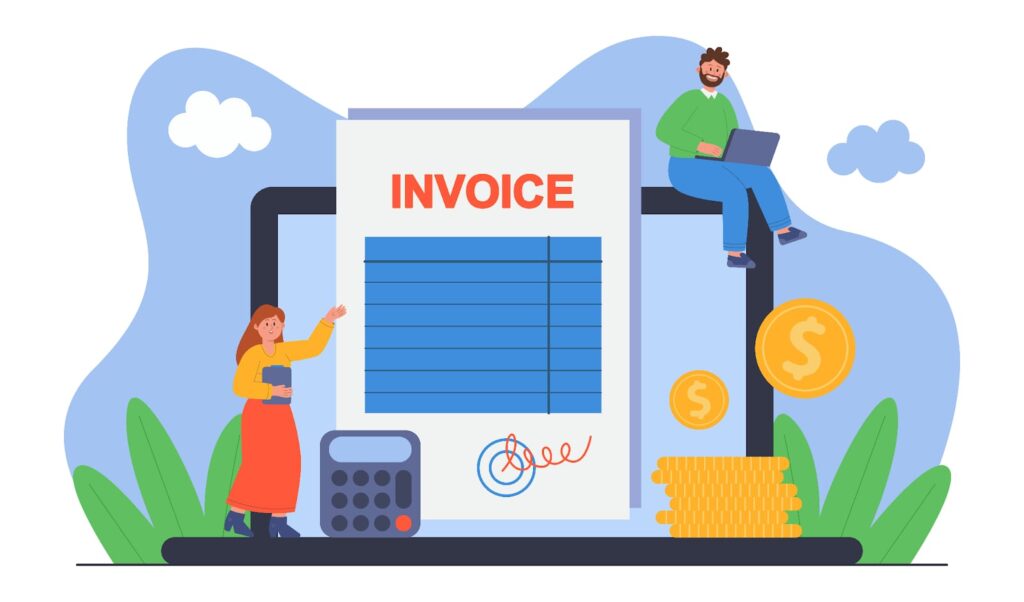
The integration process transitions a paper-based checklist to an automated process. The mechanics of their working together are as follows:
Step 1: Setup and Configuration
An “electronic handshake” commences the process. Your cloud accounting system (for example, Xero) is connected to your selected e-invoice provider via an API or OAuth authentication.
- Compliance Check: Adjust the software to the tax regulations of your area (for example, VAT in Europe or GST in Asia).
- Mapping: Determine the mapping of data fields of your invoices (Item Code, Quantity, Tax Amount) to your general ledger codes.
Step 2: Invoice Creation and Generation
Rather than typing a document, the user feeds the data into their cloud dashboard.
- Formatting: The software can instantly convert this input to a standardized format, such as UBL 2.1 (Universal Business Language).
- Security: To verify the authenticity of the data packet, unique identifiers (QR codes or digital seals) are added.
Step 3: Transmission and Validation
This is the key distinguishing factor. The invoice is not sent by email, but rather via a secure network (such as the PEPPOL network).
- Validation: The software will validate the invoice against government registries before it is sent to the client. Without a tax code, it is automatically discarded and fixed, thus saving months of back-and-forth disputes that may arise.
Step 4: Processing and Reconciliation
At the receiver side, the cloud accounting platform identifies the received digital invoice.
- Auto-Import: The invoice will be automatically displayed in the Accounts Payable module.
- AI Matching: The system tries to match the invoice to open Purchase Orders. If the amounts are the same, it can be set to auto-approve.
Step 5: Archiving and Reporting
Upon payment, the data is stored in the cloud. These electronic archives are irrevocable. That is, they cannot be modified without leaving a record that meets the 7+ years of storage required in most jurisdictions.
Key Benefits and Real-World Impact

Moving towards integrated e-invoicing is not only a compliance issue, but a financial health strategy.
- Efficiency Gains: Finance teams can also reduce Accounts Receivable (AR) and Accounts Payable (AP) by 50% to 75% through the elimination of manual data entry.
- Cost Savings: Paper, printing, and postage may be eliminated, potentially saving $10- $15 per invoice.
- Compliance and Security: Automated audit trails significantly reduce the risk of invoice fraud and enable compliance with tax audit requirements.
As mentioned, recent market analysis indicates that the trend of automation is accelerating, with the global e-invoicing market projected to grow at a CAGR of more than 20% by 2025.
Challenges: The initial setup cost and staff training are usually the main obstacles. Nonetheless, ROI is usually achieved in 6 to 12 months.
Conclusion
Cloud accounting has evolved into a dynamic financial engine rather than a passive system of record-keeping thanks to e-invoice software.
Using this combination, your business not only saves time but also safeguards its cash flow and operations amid a wave of global digital regulations.













Post Comment