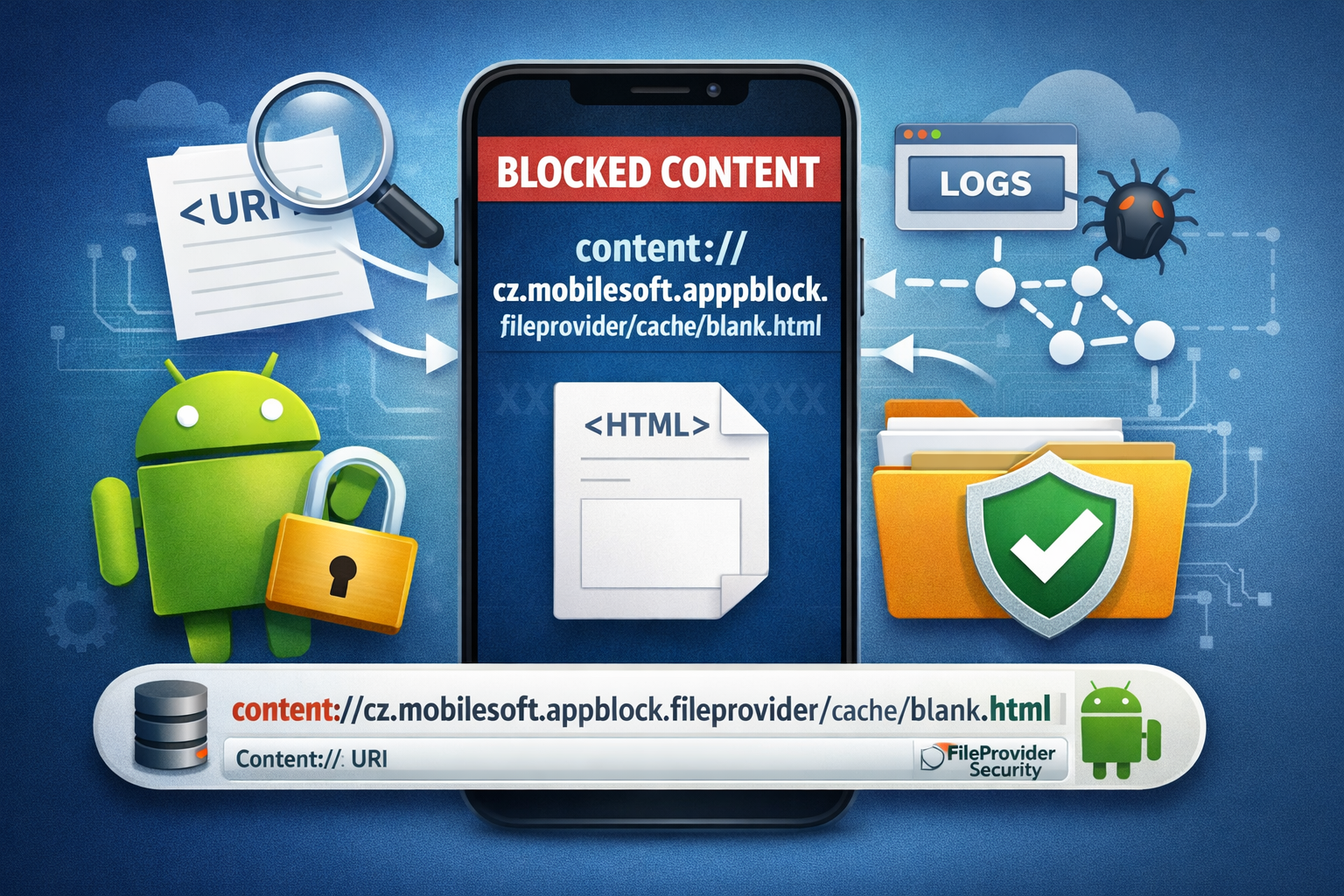
Content://cz.mobilesoft.appblock.fileprovider/cache/blank.html – Meaning and How It Works
Introduction
Have you ever encountered the mysterious URI
content://cz.mobilesoft.appblock.fileprovider/cache/blank.html
while browsing your Android device logs, debugging apps, or even seeing a blank screen in a browser or WebView?
If yes, don’t worry, you’re not alone.
At first glance, this URI looks confusing and even suspicious. However, it is actually a legitimate and secure internal Android content URI, commonly associated with the AppBlock productivity application.
This article explains what content://cz.mobilesoft.appblock.fileprovider/cache/blank.html means, how it works, why it appears, and why it is safe. Whether you are an Android developer, a security-conscious user, or simply curious, this guide will give you a complete and easy-to-understand explanation.
Key Takeaways
- content://cz.mobilesoft.appblock.fileprovider/cache/blank.html is a secure internal URI used by the AppBlock app
- Android Content URIs allow controlled and permission-based file sharing
- AppBlock uses this cached HTML file to display blocked or placeholder content
- FileProvider improves security by avoiding direct file system exposure
- Proper permission handling is essential when working with Content URIs
Understanding Android Content URIs
Content URIs are a core part of Android’s secure data-sharing system. Instead of exposing raw file paths like /storage/emulated/0/, Android uses content:// URIs to control access through permissions.
This approach ensures:
- Better security
- App sandboxing
- Controlled file access
The URI content://cz.mobilesoft.appblock.fileprovider/cache/blank.html is one such example.
The Anatomy of a Content URI
A standard Android Content URI follows this structure:
content://<authority>/<path>/<resource>
Breaking down
content://cz.mobilesoft.appblock.fileprovider/cache/blank.html
- Scheme:
content://– Identifies it as a content URI - Authority:
cz.mobilesoft.appblock.fileprovider– AppBlock’s FileProvider - Path:
cache– AppBlock’s cache directory - Resource:
blank.html– Cached placeholder HTML file
Why Content URIs Matter for Security
| Feature | Traditional File Path | Content URI |
|---|---|---|
| File Exposure | Direct access | Abstracted |
| Permissions | Broad OS access | App-level control |
| Access Duration | Permanent | Temporary |
| Security | Weak | Strong |
Using FileProvider prevents unauthorized access and accidental data leaks.
Decoding the AppBlock FileProvider
What Is AppBlock?
AppBlock is a productivity and digital-wellbeing app developed by MobileSoft s.r.o. It helps users:
- Block distracting apps
- Restrict websites
- Improve focus
- Manage screen time
The Role of blank.html in AppBlock
The file blank.html plays a critical role:
- Blocking Interface: Displays a clean placeholder when content is restricted
- User Experience: Avoids showing error pages
- Performance: Loads instantly from cache
- Resource Efficiency: Uses minimal system resources
In simple terms, blank.html replaces blocked content with a neutral screen.
Technical Implementation of FileProvider
FileProvider Configuration Example
<provider
    android:name="androidx.core.content.FileProvider"
    android:authorities="cz.mobilesoft.appblock.fileprovider"
    android:exported="false"
    android:grantUriPermissions="true">
    <meta-data
        android:name="android.support.FILE_PROVIDER_PATHS"
        android:resource="@xml/file_paths" />
</provider>
Accessing Content Using ContentResolver
Uri contentUri = Uri.parse(
 "content://cz.mobilesoft.appblock.fileprovider/cache/blank.html");

try (InputStream inputStream =
     getContentResolver().openInputStream(contentUri)) {

    if (inputStream != null) {
        BufferedReader reader =
            new BufferedReader(new InputStreamReader(inputStream));
        StringBuilder html = new StringBuilder();
        String line;

        while ((line = reader.readLine()) != null) {
            html.append(line);
        }
    }
} catch (IOException e) {
    Log.e("AppBlock", "Failed to load cached HTML", e);
}
Common Scenarios Where You’ll Encounter This URI
During AppBlock Usage
- A blocked website
- A restricted app
- Focus mode active
AppBlock replaces content with blank.html instead of errors.
In System Logs and Debugging
- WebView redirects
- Cache access logs
- Restriction enforcement
- Performance tracking
WebView Integration
WebView may load this URI to:
- Show placeholder content
- Handle offline mode
- Gracefully block pages
Security Considerations and Best Practices
| Security Area | Best Practice |
|---|---|
| Authority Naming | App-specific |
| Path Control | Restrict directories |
| Permissions | Temporary grants |
| Validation | Sanitize inputs |
Vulnerabilities to Avoid
- Path traversal attacks
- Permission leaks
- Unsafe FileProvider configs
Troubleshooting Common Issues
Access Permission Errors
try {
    ParcelFileDescriptor pfd =
        getContentResolver().openFileDescriptor(contentUri, "r");

    if (pfd != null) {
        FileInputStream fis =
            new FileInputStream(pfd.getFileDescriptor());
        pfd.close();
    }
} catch (SecurityException e) {
    Log.e("Security", "Permission denied", e);
}
WebView Loading Issues
webView.setWebViewClient(new WebViewClient() {
   @Override
   public WebResourceResponse shouldInterceptRequest(
       WebView view, WebResourceRequest request) {

       Uri uri = request.getUrl();
       if ("content".equals(uri.getScheme())) {
           try {
               InputStream is =
                   getContentResolver().openInputStream(uri);
               return new WebResourceResponse(
                   "text/html", "UTF-8", is);
           } catch (Exception e) {
               Log.e("WebView", "Load failed", e);
           }
       }
       return super.shouldInterceptRequest(view, request);
   }
});
Advanced Use Cases and Integration Patterns
Custom File Sharing
<paths xmlns:android="http://schemas.android.com/apk/res/android">
   <cache-path name="cached_files" path="." />
   <files-path name="app_files" path="." />
   <external-cache-path name="external_cache" path="." />
</paths>
Progressive Web App Integration
- Offline fallback pages
- App-shell architecture
- Fast loading experiences
- Progressive enhancement
Performance Optimization Strategies
| Strategy | Use Case |
|---|---|
| Memory Cache | Fast access |
| Disk Cache | Large files |
| Hybrid Cache | Complex apps |
Best Practices
- Clean up resources
- Use background threads
- Stream large files
- Provide fallback UI

Mastering Content URIs in Android Development
Understanding
content://cz.mobilesoft.appblock.fileprovider/cache/blank.html
reveals how modern Android apps balance security, performance, and user experience.
AppBlock’s implementation demonstrates:
- Secure file sharing
- Clean UI handling
- Smart caching
For developers, mastering Content URIs is essential for building robust and secure Android applications.
Internetchicks: Meaning, Influence & How They Shape
FAQs
Is content://cz.mobilesoft.appblock.fileprovider/cache/blank.html safe?
Yes. It is a legitimate and secure FileProvider URI used internally by AppBlock.
Can other apps access this file?
No. Only apps with explicit permissions can access it.
Why does it appear in logs or browser history?
It appears when AppBlock blocks content or when WebView loads cached placeholders.
Can I open it directly in a browser?
No. Content URIs are app-specific and not public web pages.
What happens if AppBlock is uninstalled?
The URI becomes invalid and no longer resolves.














Post Comment