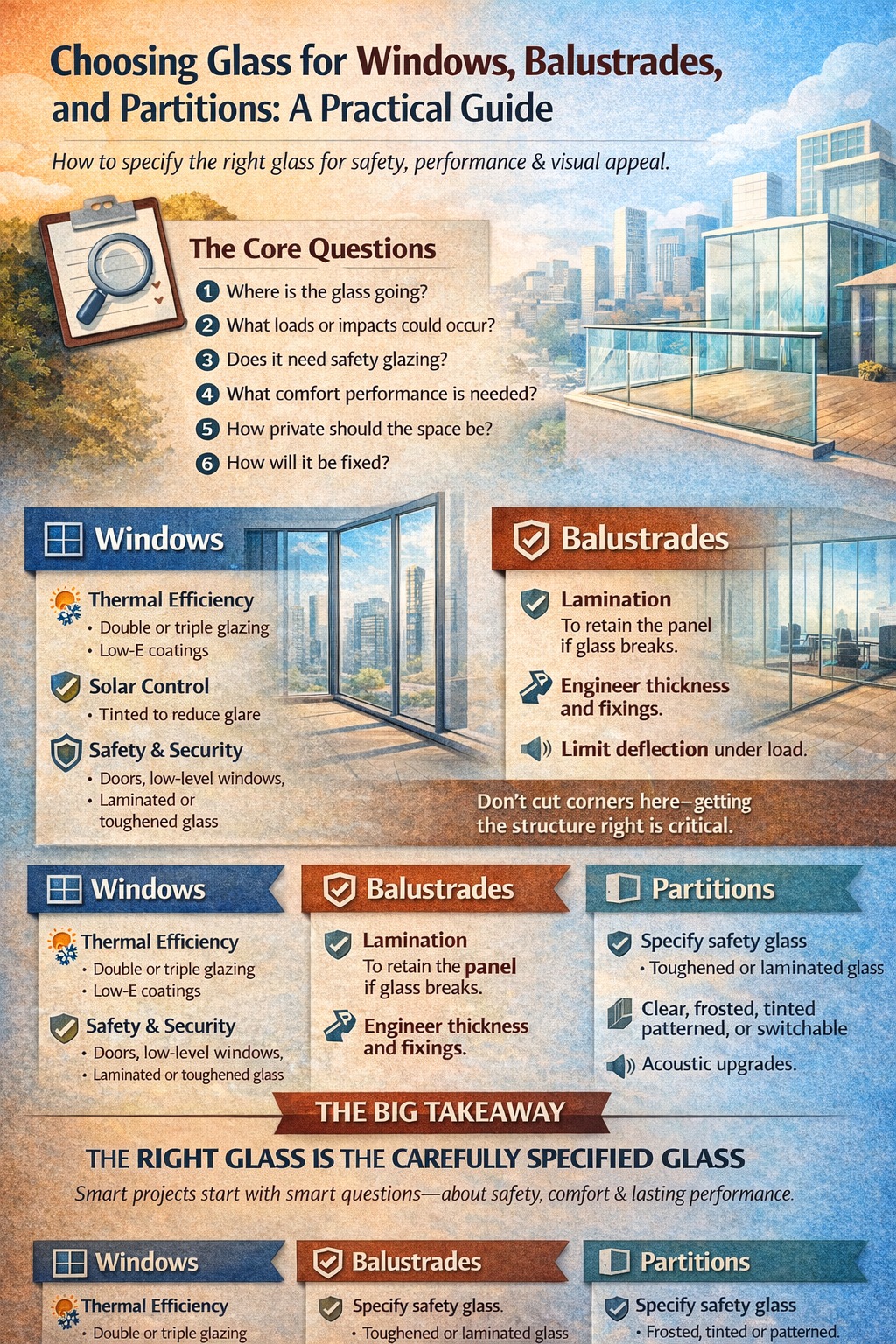
Choosing Glass for Windows, Balustrades, and Partitions: A Practical Guide
Glass is no longer just something you look through. In modern buildings it performs structural, safety, thermal, acoustic, and aesthetic roles all at once. From floor-to-ceiling windows and minimalist stair balustrades to light-filled office partitions, today’s glazing must work hard behind the scenes.
Choosing the wrong type of glass can mean higher energy bills, uncomfortable spaces, regulatory problems—or serious safety risks. Choosing the right type can dramatically improve comfort, longevity, and visual impact.
This guide breaks down how to select the right glass for windows, balustrades, and partitions, explains the key performance factors, and gives you a practical decision framework you can apply to real projects.
Why Glass Selection Is So Important Today
Traditional buildings used relatively uniform glazing—thin panes with limited performance differences. Modern construction relies on engineered glazing systems, combining:
- Heat-treated glass
- Laminated layers
- Energy-saving coatings
- Insulated cavities
- Acoustic interlayers
- Structural fixings
Each element is chosen for a reason. A balcony barrier faces different loads from an office wall, and a window faces very different challenges from an internal screen.
In short: context determines specification.
The Core Questions to Ask Before Choosing Any Glass
Before focusing on application, run through this checklist:
✅ 1) Where is the glass going?
External façade? Stair edge? Bathroom screen? Boardroom divider?
✅ 2) What loads or impacts could occur?
Human contact, leaning forces, wind pressure, or falling risk?
✅ 3) Does it need to meet safety-glazing rules?
Many locations legally require toughened tempered glass or laminated glass.
✅ 4) What comfort performance is needed?
Heat retention, solar control, sound insulation?
✅ 5) How private should the space be?
Clear, frosted, patterned, tinted, or switchable?
✅ 6) How will it be fixed?
Channels, posts, clamps, frames, or point fixings?
Keep these six questions in mind—everything else flows from them.
�� Choosing Glass for Windows
Windows are one of the most technically demanding parts of any building. They must:
- Resist weather
- Retain heat
- Control solar gain
- Reduce noise
- Remain safe under impact
- Maintain clear views
Key Performance Factors for Windows
Thermal Efficiency
Modern windows normally use double or triple glazing with sealed cavities and Low-E coatings that reflect warmth back inside during winter and limit overheating in summer.
Solar Control
South-facing elevations or large glazed façades often benefit from solar-control coatings that reduce glare without darkening interiors.
Safety and Security
Doors, low-level windows, and accessible areas usually require safety glass. Laminated inner panes also provide additional resistance to forced entry.
Acoustic Insulation
Laminated glass and varied cavity widths significantly reduce external noise—especially valuable near roads, railways, or city centres.
Typical Window Glass Configurations
- Double-glazed insulated units
- Toughened outer panes
- Laminated inner panes
- Low-E coated glass
- Solar-control glazing
��️ Choosing Glass for Balustrades
Glass Balustrades on stairs, balconies, landings, and terraces—are structural safety elements, not decorative features.
Here, glass must act as a protective barrier capable of resisting people leaning or falling against it.
What Makes Balustrades Different?
Balustrades must resist:
- Crowd loading
- Horizontal forces at handrail height
- Wind pressure (externally)
- Impact loads
Because of this, they almost always use laminated safety glass, often manufactured from two or more toughened sheets bonded together.
Critical Specification Points for Balustrades
Lamination
Essential to keep the panel in place if it cracks.
Thickness
Depends on height, span, fixing system, and design loads.
Edge Finish
Polished or arrissed edges improve durability and appearance.
Fixing Method
Base channels, posts, clamps, or point fixings all affect structural behaviour.
Deflection Control
Balustrades should not flex excessively under load—even if technically strong enough.
Common Balustrade Systems
- Frameless base-channel glazing
- Post-supported panels
- Point-fixed glass barriers
- Glass infill within metal rails
Tip: Balustrades are not the place to cut costs—structural design input is normally essential.
�� Choosing Glass for Partitions
Glass partitions are popular in offices and homes because they divide space while preserving light.
They are usually sheltered from weather but see frequent human interaction, so impact safety and durability still matter.
Key Considerations for Partitions
Safety
Toughened or laminated glass reduces injury risk.
Sound Control
Meeting rooms or bedrooms benefit from laminated glass or double-glazed partition systems.
Privacy
Choose between clear, frosted, reeded, patterned, tinted, or switchable smart glass.
Visual Weight
Thicker panels feel more solid and premium—especially in frameless designs.
Typical Partition Options
- Single toughened panels in slim frames
- Frameless glazed walls
- Acoustic double-glazed systems
- Frosted bathroom screens
- Smart privacy glass
�� Thickness: Why It Matters
Thickness affects far more than strength:
- Stiffness and deflection
- Acoustic insulation
- Visual quality
- Hardware compatibility
- Safety performance
But thicker is not always better. The correct build-up depends on:
- Panel size and height
- Support conditions
- Load requirements
- Whether the glass is laminated
- Regulatory limits
�� Toughened vs Laminated: Know the Difference
These two terms appear constantly in specifications—and for good reason.
Toughened (Tempered) Glass
- Heat-treated for increased strength
- Breaks into small blunt fragments
- Common in doors, partitions, and furniture
Laminated Glass
- Multiple layers bonded with an interlayer
- Holds together if broken
- Essential for balustrades, overhead glazing, and security-critical areas
Many high-performance systems combine both: laminated glass made from toughened sheets.
✅ Quick Decision Guide
Windows
- Prioritise insulation and solar control
- Use safety glazing near floor level or in doors
- Consider laminated panes for security
- Upgrade acoustics where noise is an issue
Balustrades
- Always specify laminated safety glass
- Engineer thickness and fixings
- Limit deflection
- Finish edges properly
Partitions
- Use toughened or laminated glass
- Choose privacy level early
- Add acoustic upgrades where required
�� Final Thoughts
Modern glass is highly specialised. Windows, balustrades, and partitions all demand different performance characteristics, and successful projects recognise those differences early.
Ask the right questions about loads, risks, comfort, and fixing methods—and let those answers guide the specification.
When chosen properly, glass becomes exactly what contemporary architecture promises:
Safe. Efficient. Adaptable. Beautifully transparent.













Post Comment