BOPET Twist Film in the Packaging Industry: How It’s Transforming PET Bottles into Sustainable and High-Performance Containers
The packaging industry has always been shaped by the tug-of-war between performance demands and sustainability expectations. As consumers become more conscious of environmental impacts and brands strive to enhance product appearance, durability, and shelf appeal, packaging materials are undergoing rapid innovation. Among these innovations, Bopet Twist Film has emerged as one of the most promising solutions for transforming PET bottles into more sustainable, visually appealing, and functionally superior containers. What once began as a specialty film known for its clarity and strength is now becoming an essential player in the evolution of modern packaging.
This article explores how BOPET twist film is reshaping the PET bottle landscape, why manufacturers are gravitating toward it, and how its performance characteristics align with global sustainability goals. By understanding the material’s unique physical traits and its expanding role in bottle labeling, shrink sleeves, and protective applications, we can appreciate how it supports a future where packaging is both high-performing and environmentally responsible.
Understanding BOPET Twist Film
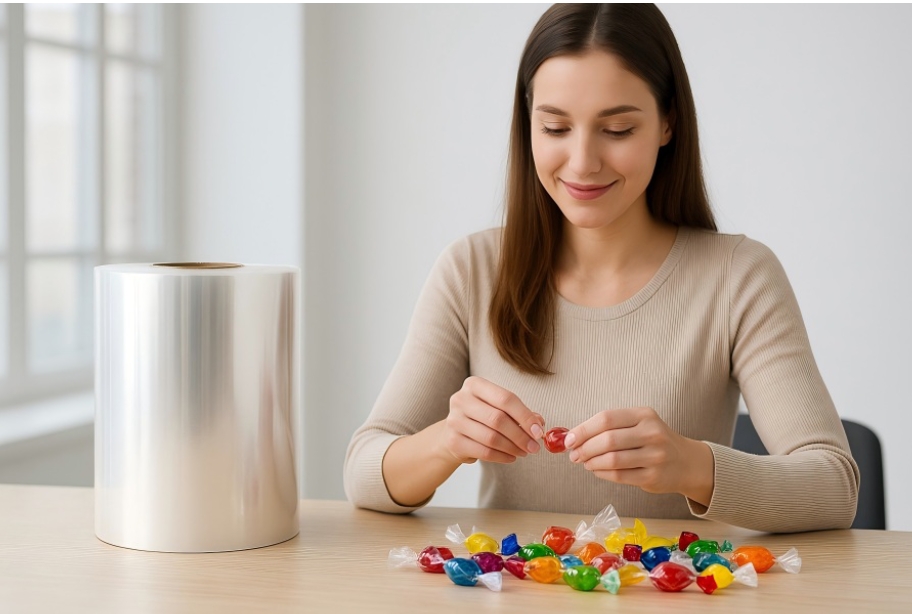
BOPET, or biaxially oriented polyethylene terephthalate, is a polyester film stretched in both directions to achieve exceptional strength, clarity, and dimensional stability. The twist version of this film is specifically engineered to mimic the twisting properties of traditional materials like cellophane while offering far superior durability. This makes it highly suitable for labeling and wrapping applications that demand a balance of form, function, and aesthetics.
The molecular orientation achieved during the biaxial stretching process gives BOPET twist film its defining qualities: impressive tensile strength, outstanding barrier performance, and a glossy finish that enhances visual appeal. It also has a natural stiffness that helps it maintain its shape, allowing it to wrap tightly around PET containers without wrinkling or tearing. This balance of flexibility and rigidity is one of the reasons it is becoming an ideal match for today’s fast-moving, brand-conscious packaging environment.
Why PET Bottles Need Advanced Support Materials
PET bottles have dominated beverage, personal care, and household packaging for decades due to their clarity, lightweight structure, and cost-effectiveness. However, as consumer expectations evolve and regulations tighten, the traditional PET bottle faces increasing pressure to improve. Brands want better decoration techniques, more durable labels, and sustainable enhancements that help reduce environmental footprints. That is where BOPET twist film provides a modern solution.
PET bottles on their own cannot consistently achieve the desired level of scratch resistance, UV protection, or aesthetic detailing that premium brands expect. They also need compatible labeling materials that do not compromise the container’s recyclability. BOPET twist film aligns closely with the physical and chemical characteristics of PET, making it a harmonious companion material that enhances the bottle without creating recycling complications.
Enhancing Visual Appeal Through High-Quality Decoration
One of the most striking contributions of BOPET twist film to PET bottle packaging is its ability to transform the container’s visual aesthetics. Brands rely heavily on labels and wraps to communicate identity, and with consumer attention spans shrinking, shelf distinction is more important than ever.
The glossy or matte finish of BOPET film gives PET bottles a polished, high-end appearance. Because the material offers exceptional printability, designs reproduce with crispness and vibrancy, ensuring that colors pop and text remains clear even under challenging retail lighting. Whether used for partial labels, full-body wraps, or decorative seals, the film elevates the container’s appearance to meet modern branding expectations.
Additionally, twist film retains its shape and position beautifully. Unlike more elastic films that may shrink, warp, or distort over time, BOPET maintains its integrity even in environments with fluctuating temperatures. This means the label or wrap will not wrinkle or bubble, preserving the product’s premium appearance from production to consumer use.
Improving Bottle Performance with Superior Barrier Properties
Beyond appearance, BOPET twist film plays a crucial role in enhancing the functional performance of PET bottles. PET already offers relatively good barrier protection, but specific applications require stronger resistance to gases, moisture, and UV radiation. Here, BOPET outperforms many other packaging films due to its dense molecular structure and excellent barrier capabilities.
When applied to a bottle’s label or outer wrap, BOPET twist film can add an extra layer of protection, helping preserve the container’s contents for longer. This is particularly important for beverages vulnerable to light-related degradation, such as juices, flavored waters, and energy drinks. The film helps shield the liquid from UV rays, thereby slowing oxidation and preserving product quality.
Moreover, BOPET’s resistance to moisture and external contaminants makes it ideal for personal care and household products that require consistent protection against environmental exposure. This added barrier performance extends product shelf life while reducing the risk of spoilage or quality deterioration.
Supporting Recycling and Circular Economy Initiatives
One of the most significant challenges in modern packaging is the necessity to improve sustainability without sacrificing performance. Many labeling materials, coatings, or decorations used on PET bottles hinder recyclability by adding foreign materials that contaminate the waste stream. BOPET twist film, however, is well aligned with the composition of PET, making it a more recyclable option compared with PVC or multi-material alternatives.
Because BOPET and PET share a compatible polymer base, they can be processed together in many recycling plants. While complete compatibility depends on local recycling infrastructure and contamination thresholds, BOPET twist film is generally recognized as one of the most suitable decorative materials for PET bottles in circular systems.
By integrating BOPET film into bottle design, brands not only upgrade the bottle’s performance but also support closed-loop recycling initiatives. This is critical at a time when environmental regulations are prompting companies to redesign packaging to improve recyclability, reduce waste, and increase material recovery rates. BOPET’s recyclability makes it a responsible choice for companies striving to meet sustainability targets.
Boosting Production Efficiency in High-Speed Manufacturing
Modern bottling facilities operate at incredibly high speeds, and materials used in the process must be compatible with fast-moving automated lines. BOPET twist film’s stability and stiffness make it ideal for efficient processing. The material feeds smoothly during wrapping and labeling operations, minimizing machine stoppages and ensuring consistent application.
Because the film is highly resistant to stretching and tearing, production waste is significantly reduced. This not only saves money but also contributes to sustainability by lowering total material consumption. BOPET’s dimensional stability enables manufacturers to maintain tight tolerances, ensuring the wrap fits the bottle flawlessly without misalignment or slippage.
Additionally, the film does not absorb moisture, which helps maintain performance even in humid or temperature-variable facilities. This consistency is invaluable in high-volume manufacturing environments where uptime and precision are crucial for profitability and output quality.
Compatibility with Heat-Activated Applications
Shrink sleeves, tamper-evident bands, and certain decorative wraps rely on heat activation for proper adhesion and fitting. Some films perform poorly under heat, losing clarity, shrinking unpredictably, or warping. BOPET twist film, however, retains its physical integrity even when exposed to high temperatures during application.
This heat resistance makes it particularly useful for tamper-evident seals on PET bottles, which are critical for product safety in beverages, pharmaceuticals, and personal care goods. The film maintains its shape and clarity under heat, ensuring reliable functionality without compromising the packaging’s visual appeal.
For brands that rely on heat-based decoration technologies, BOPET twist film offers a dependable solution that supports both technological efficiency and aesthetic precision.
Strength and Durability for High-Use Environments
PET bottles are often handled multiple times before reaching the consumer. They encounter shipping vibrations, stacking pressures, friction during transport, and routine handling in retail displays. Labels made from weaker materials can scratch, peel, or fade during this journey, diminishing brand value and potentially affecting consumer trust.
BOPET twist film, known for its outstanding mechanical strength, withstands these challenges better than many competing films. Its resistance to abrasions, punctures, and tearing ensures the bottle’s appearance remains intact throughout its lifecycle. For brands that aim to deliver a consistent visual identity from factory to shelf, BOPET offers the reliability needed to protect their packaging investment.
In addition to external durability, the film also resists chemical exposure. Many personal care and household cleaning products contain ingredients that can degrade or discolor standard label films. BOPET’s chemical resistance ensures that prints remain vibrant and legible, even if the bottle encounters spills or leaks.
A Step Toward Premium and Sustainable Packaging Futures
The shift toward BOPET twist film represents more than a technical upgrade; it reflects a broader industry trend toward packaging solutions that harmonize sustainability with firm performance. Consumer perception increasingly favors brands that demonstrate environmental responsibility, and packaging is often the most visible indicator of that commitment.
By adopting BOPET twist film, companies can create PET bottles that are not only more beautiful but also more efficient and more environmentally responsible. The material supports recycling initiatives, enhances durability, and extends product shelf life—all while delivering the premium appearance brands need to compete in crowded markets.
As sustainability regulations evolve and consumer expectations continue to rise, materials like BOPET twist film and PETG Shrink Film are likely to become even more critical. The future of PET bottle packaging will depend on innovative materials that maintain performance without adding environmental burdens. BOPET twist film stands as a compelling solution at this critical intersection of innovation and responsibility.
Conclusion
The transformation of PET bottles through the adoption of BOPET twist film marks a significant development in the ongoing evolution of packaging materials. With its exceptional clarity, mechanical strength, barrier protection, and recyclability benefits, the film addresses the core challenges of today’s packaging landscape. It enhances both the visual appeal and the structural integrity of PET containers while aligning with global sustainability goals.
As brands increasingly seek materials that offer both high performance and environmental stewardship, BOPET twist film is rapidly gaining recognition as a cornerstone of next-generation packaging. Its ability to improve production efficiency, support circular recycling systems, and deliver premium aesthetics ensures that it will continue shaping the future of PET bottle design for years to come.











Post Comment