How to Choose the Right Animation Partner for Your Brand
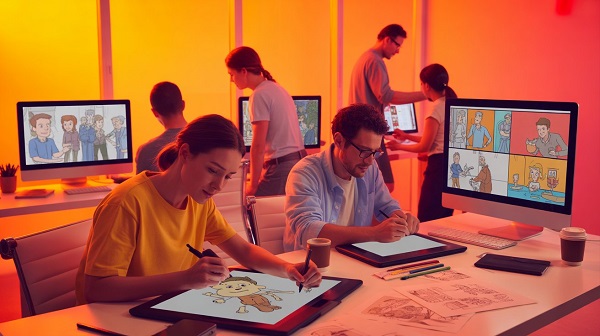
Alt text: Professionals working on different animated explainer video projects
There’s a moment every growing brand hits where words stop doing the heavy lifting.
Your product is real. Your team is serious. Your offer solves a problem people actually pay to fix. Yet your website still reads like a long hallway of paragraphs, your sales team keeps repeating the same explanations, and your ads are working harder than they should.
That’s usually the point where brands start looking for animation. Not because they want something cute, but because they want something clear. Something that makes people understand, remember, and act.
The tricky part is that animation can be done a thousand ways. Some studios are built for flashy visuals. Others are built for performance. Some are great at character work. Others are better at clean motion graphics. If you choose the wrong partner, you do not only lose budget. You lose time, momentum, and confidence in the channel.
This guide walks through what to look for, what to avoid, and how to make sure your animation investment actually moves the needle.
First, know what you need the animation to do
Before you even start browsing portfolios, get clear on the job the video must accomplish. Most animation projects fall into a few buckets:
- Explainer videos for websites, landing pages, and campaigns
- Product demos that show how something works
- Brand videos that reposition the company story
- Social media series built for short attention spans
- Training and onboarding for customers or teams
- Investor storytelling that makes complex ideas feel obvious
If you do not define the job, you risk hiring a studio that is great at one type of work but not the kind you actually need.
A simple rule: performance projects need strong messaging and structure. Visual-only projects need strong style and art direction. The best partners can do both, but you should still choose based on your goal.
What separates average animation from animation that sells
Most brands assume animation quality is mainly about visuals. Visuals matter, but what drives results is the combination of:
- Message clarity
- Pacing and structure
- Visual metaphors that simplify complex ideas
- Sound design and voice that match the audience
- Consistency with the brand, without feeling stiff
A beautiful video with weak messaging is like a high-end billboard with vague copy. It looks expensive and still does not convert.
That is why your first evaluation should not be “Do I like this style?” but “Do I understand the message fast, and do I feel compelled to keep watching?”
The questions you should ask before you ask for a quote
Brands often jump straight to pricing. A better move is to ask process questions first. The answers tell you whether the team is strategic or purely executional.
Ask:
- How do you handle scriptwriting and messaging?
If they outsource the script and treat it as a formality, that is a risk. - Do you storyboard before animating?
Storyboarding prevents expensive revisions later. - What is your revision process?
You want clear checkpoints, not endless back-and-forth. - Who is on the project team?
Look for a named producer, art director, and animator. - How do you adapt videos for different platforms?
A smart studio plans for cutdowns and aspect ratios early.
A good partner will answer confidently, with specific steps. If the answers feel vague, that usually shows up again during production.
Portfolio review, what you are really looking for
When you review samples, look beyond the surface.
1) Can they explain complex things simply
If you are selling software, health, finance, industrial products, or anything with multiple steps, clarity is non-negotiable. Watch if they can make complexity feel smooth.
2) Is the pacing tight
Strong videos move with intention. Weak videos feel like they are buying time with extra scenes.
3) Is the style consistent within a project
Consistency is a sign of good design systems. If every shot looks like it was made by a different team, that can cause brand confusion.
4) Does the video feel made for a real audience
Some work looks great but feels detached from business reality. You want samples that feel like they were built to communicate, not just to impress.
Red flags brands often miss
Some warning signs show up early, but they are easy to ignore if you are excited to get started.
- They push you to start animating before the script is locked
- They cannot explain why a style choice supports the message
- They rely on templates and call it custom
- They offer too many ideas but cannot prioritize
- They do not ask questions about your audience and funnel
Animation is expensive to redo. If a studio is not careful upfront, you pay for it later.
Why location still matters for many brands
Remote production works. Plenty of great teams are distributed. But location can still play a role depending on what you need.
If you want:
- live workshops with your team
- quick turnaround aligned with your business hours
- a partner that understands local market norms and tone
- easier coordination for voice talent and compliance requirements
then working with an animated explainer video company in the USA can simplify the process and reduce friction across reviews and approvals.
That does not mean international teams cannot deliver. It means alignment and logistics can be easier when everyone shares similar business rhythms and expectations.
The biggest cost driver, revisions
Most budget surprises come from revisions. Not because the client is difficult, but because the process did not protect the project early.
A clean production structure usually includes:
- Script approval
- Storyboard approval
- Style frames approval
- Animation in phases
- Final polish and sound
If a studio skips these gates, animation becomes a moving target. You end up paying for rebuilds instead of improvements.
How to write a brief that gets you better results
Studios can only be as strategic as the brief allows. You do not need a perfect document, but you do need a clear foundation.
Include:
- Who the video is for
- What the viewer should believe after watching
- The primary action you want them to take
- Key objections or confusions you want to address
- Brand guidelines and references
- Must-have messaging points
- Where the video will live, and in what formats
A brief like this saves time, reduces revisions, and improves final quality.
What a good timeline looks like
Even fast-moving projects need breathing room. A typical high-quality animation project can look like:
- Week 1: discovery and script
- Week 2: storyboard and style frames
- Week 3 to 4: animation production
- Week 5: polish, sound, and delivery formats
Timelines vary, but the structure should feel predictable. If a studio promises a high-end piece in a few days without clear trade-offs, be cautious.
Studio vs freelancer, which is better
Freelancers can be great for simple, well-defined tasks. But when you need strategy, coordination, and consistent design, you usually want a team.
A full animation studio often brings:
- multiple specialists
- production management
- quality control
- tighter consistency across scenes
- capacity for cutdowns and multiple deliverables
If the project is business-critical, the coordination alone can justify the decision.
Final thought, choose the partner, not the prettiest reel
The best animation partner is the one that makes your message sharper, not just your visuals smoother.
Look for a team that listens, challenges weak messaging, and can explain how creative decisions support your goal. That is how you end up with animation that earns attention, builds trust, and drives action.
If you pick based on process and clarity, the creative will follow. And when the creative follows a strong strategy, that is when animation stops being “content” and starts being a real growth asset.








Post Comment