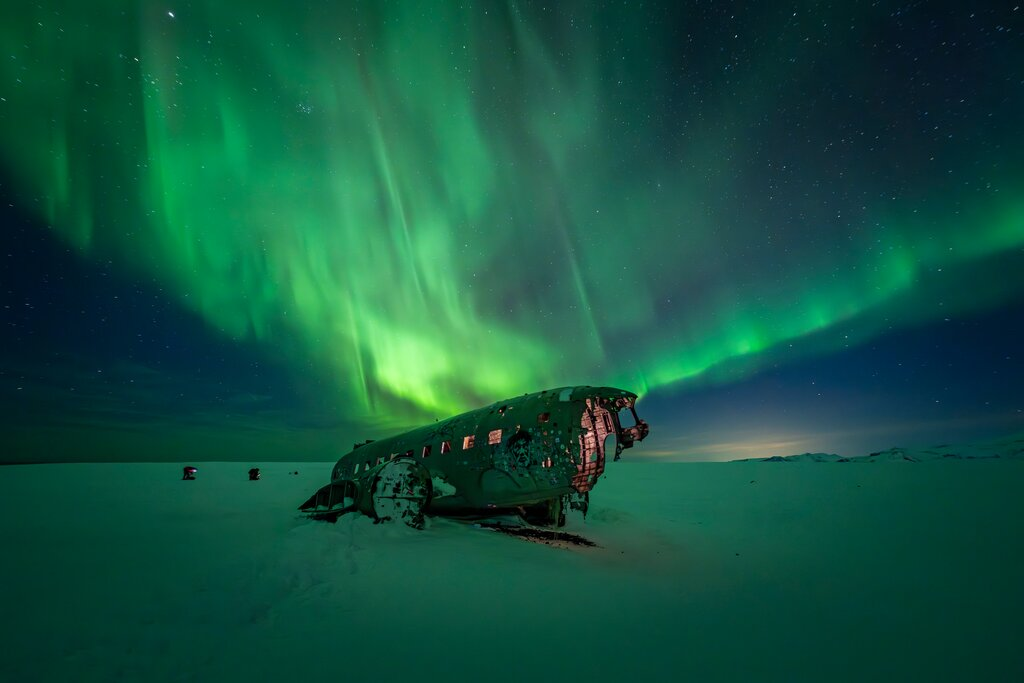
Auroras 2026: why the window still matters, and how to shoot light with just a phone
Auroras punish certainty. For 2026, the independent approach is to treat the Northern Lights as a window, not a single peak, then build a phone-first workflow that stays light, stable and honest.
Is 2026 still worth planning around Solar Cycle 25?
“Solar maximum” sounds like a date. In practice it is a phase in a roughly 11 year cycle of magnetic activity, when the Sun’s magnetic poles flip and stormy behaviour becomes more common.
NOAA’s Solar Cycle Prediction Panel expects Cycle 25 to reach a smoothed maximum of about 115 around July 2025, with an expected range of 105 to 125. It also places the peak window between November 2024 and March 2026. That is why 2026 remains interesting: it is still inside the high-activity plateau.
Memorable auroras also track individual storms rather than averages. In its solar maximum update, NASA notes an X9.0 flare on 3 October 2024 as the strongest flare of the cycle so far. You cannot schedule a flare, but you can choose a plan that makes you ready when alerts jump.
A quick translation of “Kp” into decisions
NOAA explains that Kp is an integer scale from 0 to 9, and that 5 or more indicates a geomagnetic storm. It also ties Kp to the public NOAA G scale: Kp 5 is G1, Kp 6 is G2, up to Kp 9 as G5.
- Kp tells you the “push” on Earth’s magnetic field, cloud tells you whether you will see anything.
- If you are in the UK, treat Kp as a reason to try, not a promise to succeed.
- If you travel north, use Kp to decide how late you stay out, not whether you bother.
A lightweight plan works because it reduces friction. You keep your kit ready, pick a safe viewpoint, and commit to staying still long enough for the sky to develop.
- Check cloud and fog first, then check aurora activity.
- Choose a spot with parking and a simple horizon, then give it an honest hour.
- Decide your cut-off time, so you drive home rested rather than stubborn.
At a glance: 2026 sits inside the predicted peak window, but you win or lose on cloud, darkness and flexibility. Use Kp as a trigger, not a guarantee.
Where should you go, and how do microclimates make or break the night?
The UK can deliver, but it is inconsistent. The Met Office notes that auroras can sometimes be seen as far south as Scotland, and even Northern England or Ireland, if skies are clear. It also warns that photos often portray auroras much brighter than they appear to the naked eye, especially when you are far from the auroral belt or dealing with light pollution.
Microclimates are the lever you can pull on the night. Coasts offer open horizons but can bring sea fog and wind. Valleys can trap fog on still nights. Uplands can sit above low cloud, but add ice and road risk. Woodland edges can shelter you, but can block the low horizon where the first glow appears.
The practical choice is a two-spot loop: a primary viewpoint and a back-up with different elevation or distance from the sea, within an hour. If the coast socks in, pivot inland. If valley fog rolls in, go higher. You are not chasing a perfect scene, you are buying options.
If you are publishing a how-to, or even just sharing a process, you will also need quick documentation images of the setting, the crowd and the kit. Even in an analogue story, free photo filters can help match exposure in documentation shots so the process reads clearly online.
At a glance: Choose two nearby locations with different microclimate behaviour, then let cloud and wind decide. A safe horizon beats a famous viewpoint.
What do you pack when you want “aurora without a DSLR”?

If you leave the DSLR at home, your weak points are stability, battery and focus. Pack to solve those three problems, and nothing else. A small tripod prevents blur. Warmth is not comfort, it is performance, because cold drains batteries and makes touchscreens clumsy.
Bring one clamp, one tripod, one light source and one power solution. Then add the human basics: gloves and something warm to drink.
- Compact tripod and a stable phone clamp.
- Power bank with a short cable, kept warm in an inner pocket.
- Thin liner gloves plus a warmer over-glove so you can still tap the screen.
- A dimmable torch or red light mode, to keep the night calm for everyone.
Before you even see an aurora, set your “default look” for the trip. If your phone has a night mode, learn how to lock it. If you use a manual app, lock focus and exposure so the device stops chasing brightness. For behind-the-scenes frames, free photo filters can standardise your documentation without pushing colour into fantasy.
When the horizon is cluttered, crop photo to the cleanest band of sky so the aurora reads instantly.
If you are mixing aurora frames with process shots, consistency helps viewers trust you. A light pass with free photo filters can bring mixed frames into the same exposure family, especially when your hands were cold and your exposures varied.
At a glance: Pack for stability and power, then build a workflow you can repeat without thinking. The lightest kit is the one you can set up flawlessly in the cold.
How do you keep a phone shot honest, not hyper-real?
Phones are tuned for impact. Auroras are tuned for nuance. The risk is that your device turns “faint but real” into “neon and fake”, especially if you lift shadows hard or chase saturation.
Start in the field: stabilise first, then simplify the horizon. Avoid pointing at streetlights or headlights, which can trick the phone into underexposing the sky. If your device offers RAW capture, use it, because it gives you more room to correct exposure later without tearing the file apart.
A two-minute workflow that stays honest
Lock focus if your app allows it, and take a few test frames before the aurora peaks. If the aurora is moving, prioritise a clear shape over maximum brightness. Motion blur can look like haze, and haze is the quickest route to over-editing.
In editing, behave like a witness. Lift exposure sparingly, keep white balance plausible for a cold night, and use noise reduction gently so you do not scrub away curtain structure. If you post online, add one line of context about what it looked like to your eyes.
At a glance: The honest look is the repeatable look. Stabilise first, edit lightly, and add context so viewers understand what the night really gave you.
Conclusion
Aurora photography in 2026 is less about buying kit and more about choices. Your control is close to the ground: microclimates, safe access, and a stable setup. Pack light, shoot steady, and edit like a documentarian, and your phone images can be both beautiful and trustworthy.
FAQ
Do I need to understand Kp to plan a trip?
Only enough to recognise the scale. Kp runs from 0 to 9, and 5 or more signals a geomagnetic storm, but cloud and darkness still decide the night.
Can I realistically see auroras from the UK?
Sometimes, especially from northern Scotland under clear skies. Expect faint displays and remember that photos can look brighter than the naked-eye view.
What is the single best upgrade for phone aurora shots?
A small tripod. It improves sharpness, reduces blur, and lowers the temptation to over-edit later.
How do I avoid over-editing?
Use the same small set of adjustments every time and stop before the sky turns neon. If you are unsure, share a version that matches the mood you remember.












Post Comment