
Behind the Digital Storefront: The Human Expertise Powering Your Manufacturing
A moment of silence is when you are surfing through the site of a manufacturer, late at night and going through their capabilities and portfolios of projects. The online shop looks like a sleek, well-maintained, and shiny interface, amazing equipment, and glowing reviews. One can easily feel like communicating with a faceless and efficient machine. I am not new to this feeling since I have experienced the same confusion of whether my project was simply going to be another order on a digital queue. What I’ve discovered, through years of working with partners like 3erp.com, is that behind every pixel of that digital presence are real people whose expertise and care transform your concepts into precision-crafted reality.
The First Voice You Hear
That initial response to your inquiry doesn’t come from an automated system—it comes from a person who understands both the art and science of manufacturing. I recall my initial phone call 1st who I called 3erp.com with what I believed to be a simple inquiry concerning material selection. Rather than a canned answer, I was engaged in a conversation with a twenty-minute conversation with an applications engineer who already read my files. Looking at your design, I am wondering whether we should be talking of thermal expansion coefficients that you are operating in. The regular stuff will be fine, although there is another one that may serve you better in the long run. That discussion was not only useful, but it was transformative. It also showed a practical knowledge that would never be recreated by the algorithm and a sincere desire to get the details correct at the very outset.
The Hands That Guide the Machines
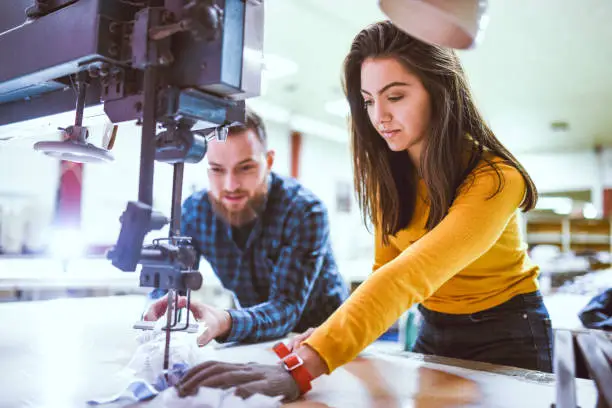
It can be easy to be amazed at the abilities of the modern CNC machinery – the five-axis movements, the micron accuracy, the unending consistency. What is invisible to us is the work of the skilled machinists, programmers and managers of these high-tech devices. I have been lucky to observe these artisans in action and this has changed my perception of the whole manufacturing process. The thing that I will never forget was when I was standing next to a veteran machinist and heard the sound of a cutting tool interacting with titanium. “Hear that change in pitch?” he asked me. The material is communicating with us that it would like things to be different. He marginally changed the feed rate and the tool started singing another, more fluent song.
The Keepers of Quality
In an age of automated inspection systems and laser scanners, it’s tempting to think that quality control has become purely mechanical. But the human eye and the experienced hand still play crucial roles that technology cannot replace. I’ve watched quality inspectors at 3erp.com spot subtle anomalies that measuring equipment had passed—a slight variation in surface texture, a barely perceptible color shift in an anodized finish, a tactile difference that defied measurement but indicated a process deviation. One inspector explained it to me while examining a batch of components: “The numbers tell me they’re within tolerance, but my experience tells me they’re not quite right. We need to understand why before we proceed.” This commitment to excellence beyond mere specification is what separates adequate manufacturing from exceptional craftsmanship.
The Problem-Solvers Who Bridge Gaps
No two complex projects run smoothly: material variations, geometric complications or new physical phenomena are all surprises. It is at this time that human knowledge comes in handy. I recall a project where we discovered, late in the process, that our chosen aluminum alloy was behaving differently than expected during machining. The team at 3erp.com didn’t just report the problem—they gathered around the part like doctors consulting on a challenging case.
The Relationship Builders
Human ability to create a real partnership is, perhaps, the least considered part of the contemporary production. In several projects with 3erp.com, I have observed how our relationship changed to a mere client-vendor partnership to a form of a collaboration. Project managers and engineers there have learned not only what we need technically, but what we design and how we expect it to be. They not only foresee our needs, but also recall our historical struggles and usually offer any improvement idea before we even realize that we have some problems. All this collected knowledge forms a collaborative brevity that ensures that each project becomes more efficient and successful as the previous one was.
It might be your introduction to a manufacturing partner through the digital storefront, but the human experience behind it that makes the actual difference in the success of your project. The Internet site can demonstrate you abilities and technologies, yet people are those who bring judgment, intuition, and concern to each decision. It is them who look at your design and do not only see lines on a screen, but possibilities. It is they who pay attention to the stuff, who notice what the machines fail to see, who find the solutions to the unforeseen issues, and who establish the relationships that make a good design great product. In a more digital world, this human factor has been the greatest asset manufacturing has the silent, skilled, committed knowledge that will turn your vision into reality.












Post Comment